 Listen Online
 Watch Online
 Find a Station in Your Area


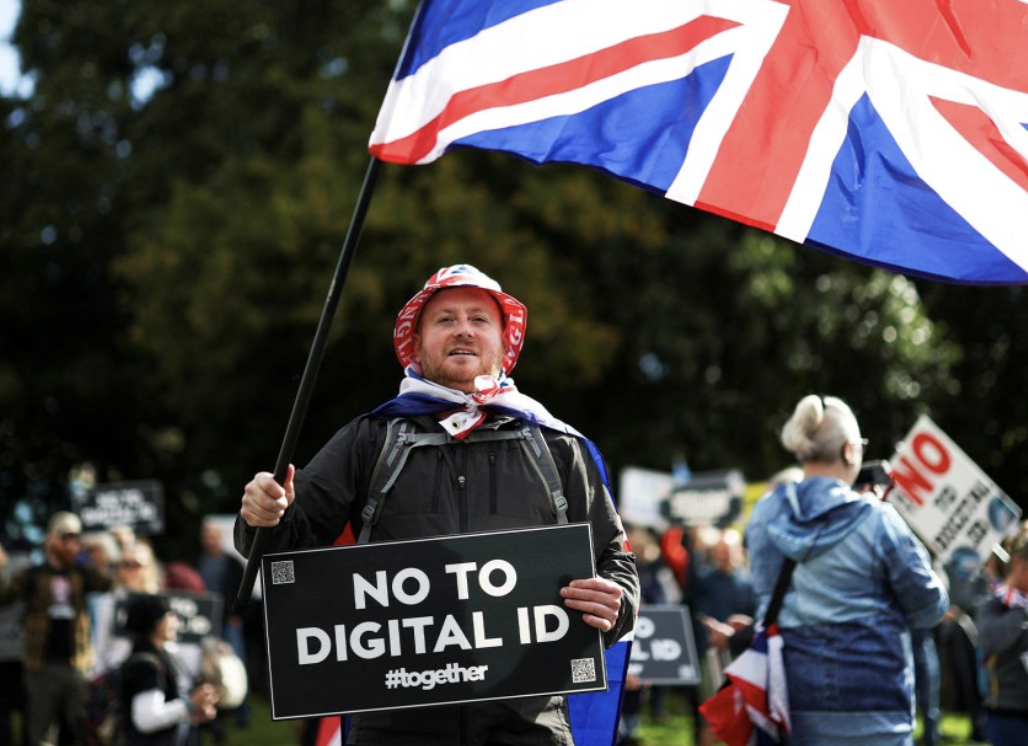



By: Michael Brendan Dougherty – nationalreview.com –
The problems it solves are real but comparatively minor. The risks it creates are enormous.
In some ways, I understand why there is some demand for a digital ID. In theory, a digital ID could offer individuals more privacy. Instead of handing your driver’s license over to a bouncer — who then learns your name, address, home state, exact birth date, and what class of vehicle you’re licensed to drive — you could simply confirm via your phone that you’re over 21 and allowed into a bar. Or, if you’re traveling and want to easily grant foreign doctors access to your medical records, a digital ID makes verifying just the needed information possible, limiting unnecessary data exposure. It could also function as a universal sign-in or passkey, relieving people of remembering multiple email and password combinations. Sixteen U.S. states have adopted some form of digital ID, with more in the planning process. But overall, that demand is limited — there’s no widespread clamor for this technology.
Twenty years ago, the British government under Tony Blair passed the Identity Cards Act to introduce a digital ID. Officials advertised that it would carry biometric data and track every use of the ID in a central database. Supposedly, this would make welfare fraud impossible, reduce illegal immigration, bring down administrative costs at the National Health Service, and help fight terrorism. The plan collapsed before full implementation, but Blair still advocates digital IDs.
Now Europe is barreling forward with plans to introduce digital IDs across the continent on an accelerated timeline. In May 2024, the European Union required every member state to offer citizens and businesses a standardized digital identity wallet within two years. Under this scheme, users would store their driver’s licenses, diplomas, medical records, and bank access all in one secure wallet. The EU has also mandated that major online platforms such as Google and Facebook accept the EU digital ID as a log-in method.
Still, there’s something inherently unsettling about this drive and the rush to implement it. Bundling so many systems together means that any problem with the digital ID could leave a person almost entirely locked out of their life — their online identities, their finances, everything. While it promises privacy on the front end, the back-end integration creates the most valuable pile of personal data in the world, a literal treasure trove for hackers and digital-age pirates. Can the EU really guarantee it will do better than Adobe (153 million accounts exposed), JPMorgan Chase (83 million households and small businesses), Facebook (540 million accounts), or Equifax (147 million records)?
Moreover, beyond the issue of governments holding this trove — whether as a treasury to protect or a resource to mine — they will inevitably start viewing it as a tool for gleaning insights about their citizens. It risks becoming a giant data panopticon for the continent.
Europe has witnessed national ID experiments before. During World War II, Britain adopted a national ID to foil spies, manage rationing and conscription, and help reunite families after displacement. After the war, the system shifted toward “papers, please” policing and administration, which began to wear on the British public. By 1952, Churchill’s Conservative government abolished the ID system “to set the people free.”
Most troubling, the digital ID that Europe hopes to impose bears a striking resemblance to the front end of a Chinese-style social credit system.
Adoption likely won’t occur until governments start scaring or nudging citizens into it, using whichever political issue is at hand — be it terrorism or illegal immigration. But there’s no reason to believe that governments already negligent in issuing driver’s licenses or work permits to illegal immigrants would suddenly become stringent about immigration when armed with digital IDs.
The problems that digital ID solves are real but comparatively minor. The risks it creates are enormous. The scramble to introduce digital IDs is, frankly, creepy.
To see this article in its entirety and to subscribe to others like it, please choose to read more.

 Viewpoints

 Take Action


 Listen Now
 Watch Online
