 Listen Online
 Watch Online
 Find a Station in Your Area





Kerby Anderson
Last month, the Trump administration issued a National Security Strategy. The document has traditionally been a list of national security concerns and how the administration plans to deal with them. The Trump document is different, and thus, has been controversial.
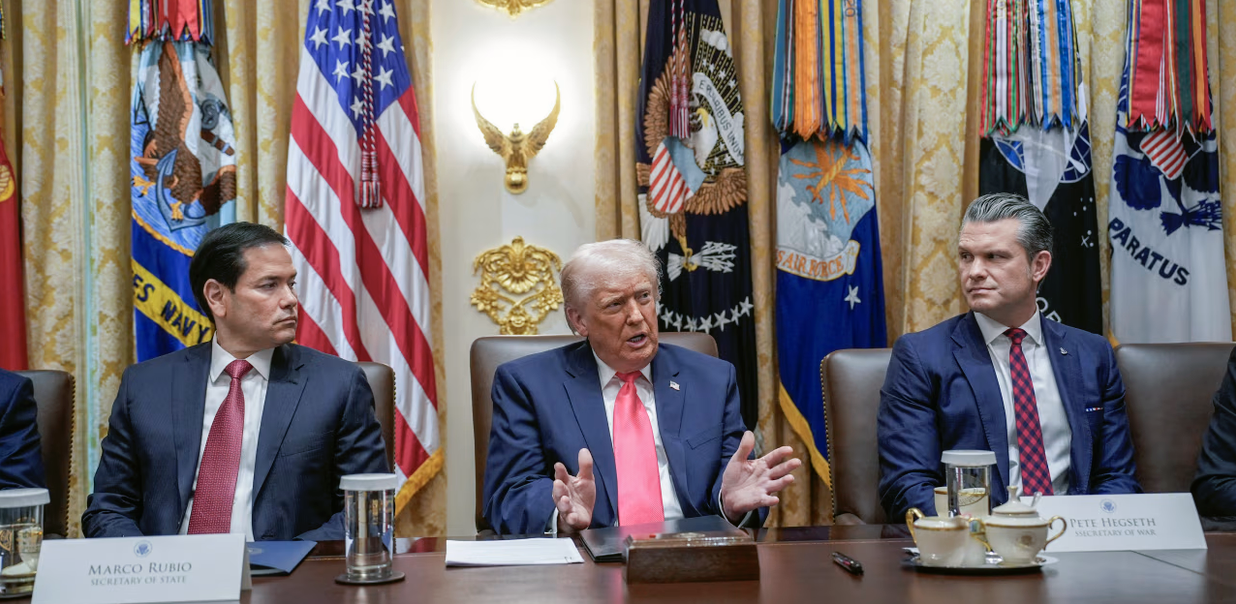
The paper reminds Americans that the past few decades have been chaotic. I suspect that Secretary of State Marco Rubio had significant input since it argues that America lost its way after the Cold War. That is what the senator said on my radio program two years ago as we talked about his book, Decades of Decadence.
Another accurate, but controversial, comment was the concern that Europe is experiencing “civilizational erasure.” Victor Davis Hanson says this is advice given to help, it has been received by Europeans “as condescending and interreference into their internal affairs.”
The economic part of the paper is obviously aimed at China. The Trump administration doesn’t want China to be dominant. It suggests we continue to maintain a triangular type of strategic relationship between Russia and China. This, Hanson explains “does not allow those two powers—one with 7,000 nuclear weapons and a huge amount of oil, the other with 1.4 billion people and probably the largest conventional military. . . to combine, strategically.”
Finally, it also puts emphasis on the Monroe Doctrine, or a new Monroe Doctrine, often called the “Trump Corollary.” We cannot have “Russians and Chinese and Iranians involved in narco-terrorism, in the case of Venezuela, maybe Colombia.” We cannot allow cartels to make billions from human trafficking and fentanyl.
If you want to understand American foreign policy in 2026, just read the Trump administration’s National Security Strategy. 


 Viewpoints

 Take Action


 Listen Now
 Watch Online
